
We have reached a point where most taxpayers view politicians and non-taxpayers as total grifters.
That belief did not appear overnight. It was earned through years of waste, opacity, and a governing culture that tolerates failure without consequence. And it is dangerous. Once trust collapses, self-government soon follows.
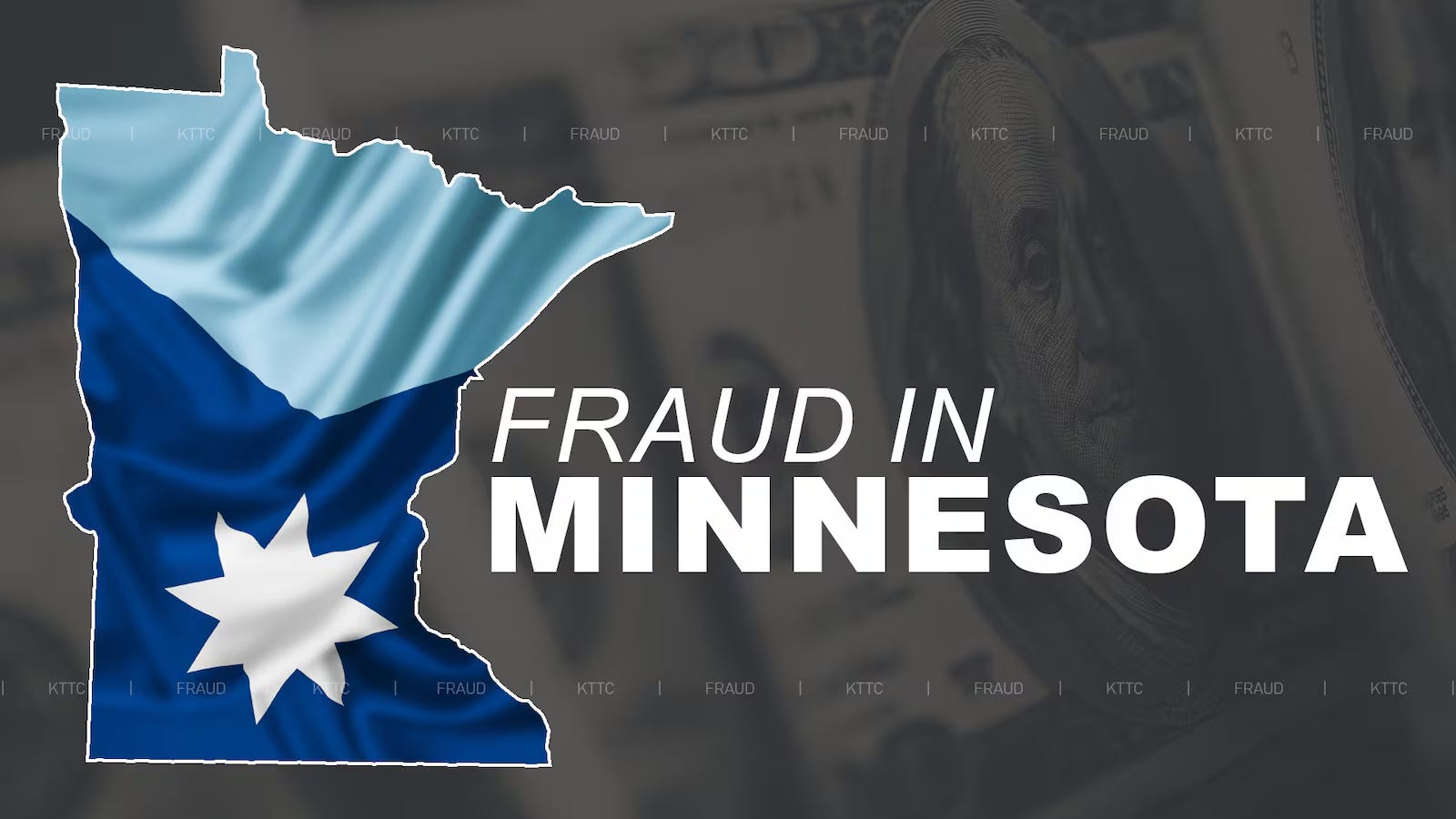
Recent reporting out of Minnesota exposed widespread fraud in taxpayer-funded daycare programs. Millions of dollars flowed to shell entities. Addresses overlapped. Payments repeated. Obvious red flags went ignored. The money vanished, and taxpayers paid the price.
This was not an isolated failure. It was a predictable outcome.
The fraud mattered because it was foreseeable. The patterns were obvious. Any competent financial system should have flagged them immediately. Either public employees ignored clear warnings, or no one bothered to look.
Both explanations point to the same problem.
And Minnesota is not alone.
We have seen billions stolen through pandemic relief fraud. We have seen abuse of public credit cards, rigged contracting, and nonprofits created solely to siphon taxpayer dollars. In South Carolina, the state lost track of $3.5 billion. Later, another $1.8 billion discrepancy surfaced. These are not accounting quirks. They are systemic breakdowns at the core of government finance.
Each scandal generates headlines. Then the system moves on.
Taxpayers do not.
Every failure reinforces the same conclusion: no one is watching the money, and no one is held responsible when it disappears.
That belief corrodes a free society.
Most taxpayers do not object to paying taxes that genuinely help people in need. They understand that a strong society protects the vulnerable. What they object to is being asked to fund systems that leak, enable fraud, and refuse to police themselves.
That is the real risk we face.
When trust in the safety net collapses, the entire system becomes undermined. People stop believing aid reaches those who need it. Support erodes. Legitimate programs lose public backing. The people who suffer most are not taxpayers, but the very individuals those programs were designed to help.
A system that tolerates fraud does not protect the vulnerable. It betrays them.
A system that tolerates fraud does not protect the vulnerable. It betrays them.
Self-government depends on earned trust. When citizens believe the rules apply evenly and public money is handled honestly, they comply willingly. They pay taxes. They follow the law. They accept outcomes they may not like.
When that belief breaks, everything changes.
Taxes feel like extraction. Laws feel arbitrary. Elections feel suspect. Civic engagement gives way to anger or apathy. Government increasingly relies on enforcement and bureaucracy because consent is gone.
That is how self-government erodes without a single vote being cast.
This cannot be fixed with better messaging or new slogans. It requires radical change across every level of government.
Transparency must be unavoidable. Every dollar traceable. Every payment tied to a contract. Every contract visible. Fraud must be detected before money leaves the door, not after journalists uncover it.
Accountability must also be real. There is a clear legal line between negligence and criminal facilitation. Honest mistakes should be corrected. Gross negligence should carry professional consequences. But when public employees knowingly ignore red flags, approve improper payments, or enable fraud through willful inaction, that is not incompetence. That is facilitation. And it should carry criminal penalties.
Bureaucrats do not get immunity because fraud occurred on their watch instead of at their direction. Stewardship of public money is a legal and moral duty.
Public trust has a tipping point. Once enough taxpayers conclude the system is irredeemably rigged, compliance gives way to resentment and consent gives way to coercion. Every unpunished scandal pushes us closer to that line. All evidence suggests we are already there.
If defenders of the status quo believe this system is acceptable, they should say so plainly and explain why taxpayers deserve less accountability than shareholders do.
That is why the Comptroller General’s office matters. It cannot function as a passive bookkeeper or a shield for bureaucratic failure. It must act as an independent financial watchdog with the authority to expose fraud, identify who allowed it, and impose consequences.
As SC Comptroller General, I will demand radical transparency, modern fraud detection, and clear responsibility. When taxpayer dollars disappear, the public will be told what happened, who failed, and what will change.
Enforce accountability now or accept the collapse of public trust.
A republic cannot function when citizens believe the people in charge are looting it.
Once that belief hardens, it does not come back.
good post. short answer? Yes.