


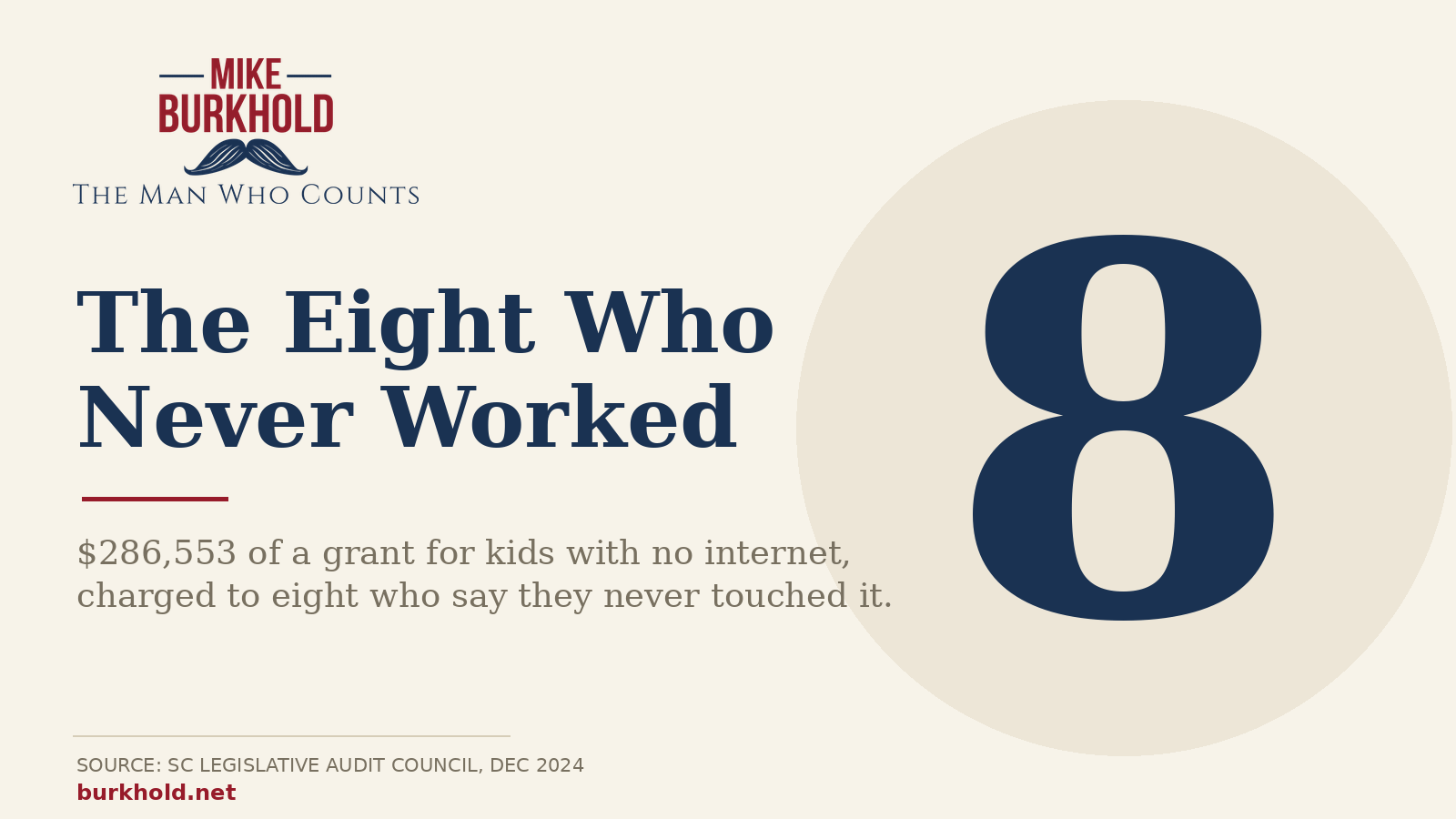
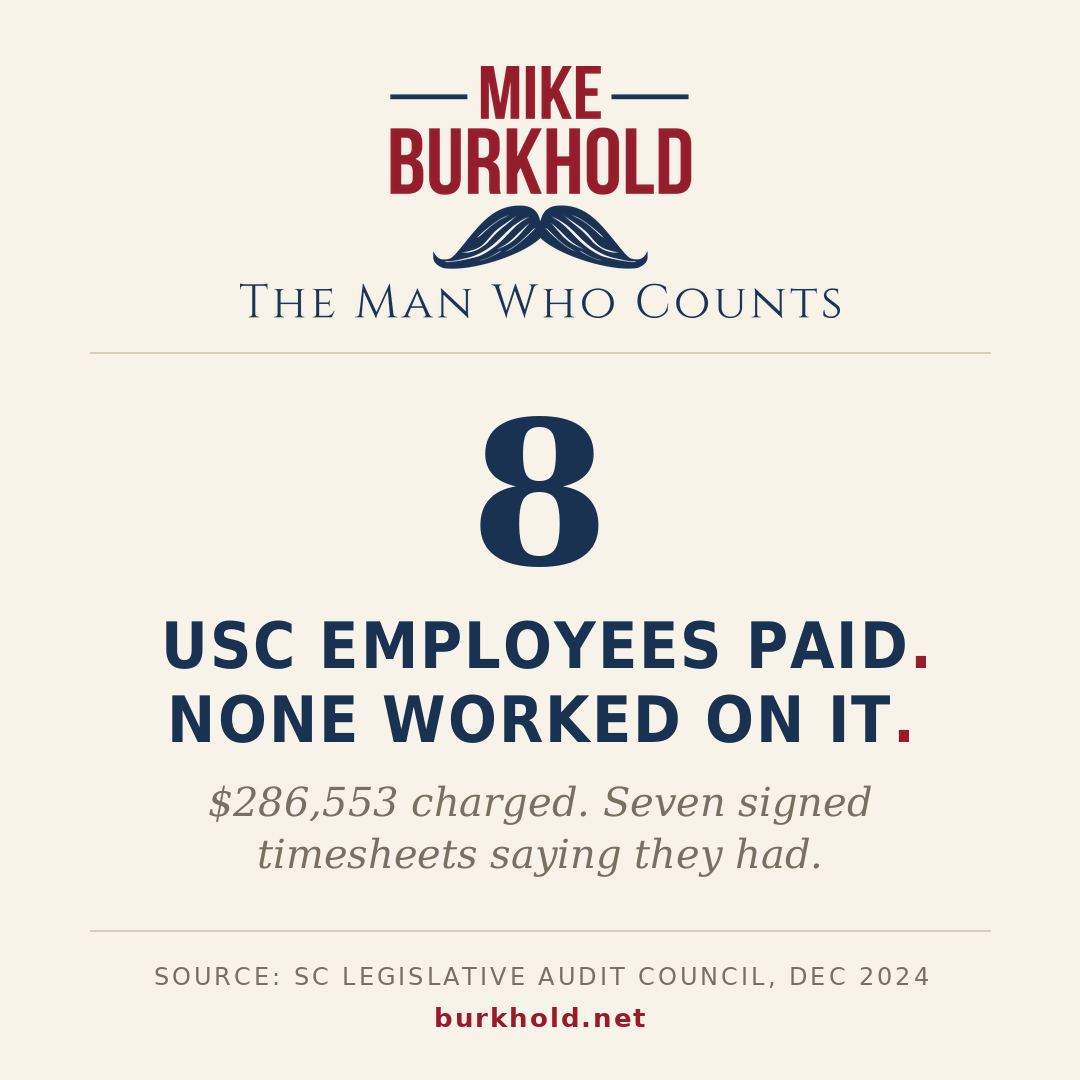
Eight people were paid from the computer lab grant. All eight told the state’s auditors they never worked on it.
That is $286,553 in salaries and benefits, charged to a federal grant meant to put computers in front of children who did not have them. The money is real. It is not the worst part of this story. The paperwork is.

A grant like this one runs on a document called a time-and-effort report. An employee signs it to certify that his pay lines up with the work he actually did on the grant. The report exists for one reason. It is the proof that grant money paid for grant work, so nobody has to stand over each person and watch the hours go by.
Seven of the eight had signed one. Each had certified, in writing, that he worked on this project. Then all eight told the auditors they had not.
The records said one thing. The people said another. The records were the ones that were wrong.
Put it in terms you live with. You pay a handyman up front for a list of jobs around the house. The gutters, the back step, the loose fence post. None of it gets done. Then he hands you an invoice with every line checked off and his name signed at the bottom. The paper says the work happened. You can walk outside and see that it did not.
The university disputes the audit. It says the spending was allowable and appropriate, and after the report came out it revised its grant reporting to pull back the costs the auditors had flagged. That belongs in the record, and it is the strongest answer the university has. Weigh it fairly. Then notice what it did. It changed the paperwork after the fact. It did not explain why eight people were paid to work on a project they say they never worked on.
Here is how a signed report ends up meaning nothing. A certification is a stand-in. It does the watching for the state that you do for free when the money is yours and you are standing right there. The state could not stand there, so it asked for a signature instead and trusted the signature to be true. And no one who signed was spending his own money on his own house. The work was for children none of them would ever meet, paid with money that started in somebody else’s paycheck. When no one in the room has a reason to check, the check becomes a formality, and a formality will sign whatever is put in front of it.
Maybe some of the eight signed without reading. Maybe some signed knowing better. The audit does not say, and for the point that matters here it does not have to. Whether any one of them was dishonest is a question for the people whose job is to judge people, and if a signature was knowingly false, that is theirs to pursue. The question this office asks comes first and is colder: how did the money move at all on signatures nobody checked? That is the oldest thing that happens to money nobody owns. The signature does the watching, and nobody watches the signature.
Setting intent aside is not setting the wrong aside. Money taken from people who got no say, meant to put a computer in front of a child who had none, was paid out as salary for work never done on it. Call it a filing error if you want. It was a wrong, whoever signed it and whatever they meant.
This is the part people miss about how money goes missing. It rarely walks out in a bag. It leaves behind a clean stack of forms, all signed, all filed, every box checked. The forms are what let everyone downstream assume the work was real. A certification that certifies nothing is worse than none at all, because it buys false confidence. It tells the next person in line to stop checking. The auditors found the gap where they happened to look.
This is the second story in a series about money the state loses track of, and it rhymes with the first. The labs that never opened were money that bought nothing. The eight who never worked are paperwork that proved nothing. Both were approved, recorded, and signed. The signature was the safeguard. The safeguard is the thing that failed.
And that is the difference between this money and yours. You do not need a signed slip to know whether the handyman showed up. You can see the gutters. When you pay for work, you know by the weekend whether you got it, because it is your money and your house and you were standing right there. The state paid eight people for the better part of a year and could not tell you what they did, because it was not standing there, and the money was never its own to begin with. You would have known by Friday.
A system is only as honest as the checks inside it, and a check that nobody checks guards nothing. It does not protect the money. It only tells the next person down the line that someone already looked.
Next week: The Hat Switch
Source: South Carolina Legislative Audit Council, A Review of the Office of Economic Engagement of the University of South Carolina and its Affiliation with the USC/Columbia Technology Incubator and the South Carolina Research Foundation (December 2024). Read it: https://lac.sc.gov/node/271
Mike. While these LAC reports are public, you sniffed them out. Good job. Looking forward to seeing you as Comptroller General!!!
I like your post, delving into possible accountability issues.